She Inherited Rice Fields and Crawfish Ponds — Now She's Helping Doctors Understand Cancer
A Family Farm With a New Kind of Harvest
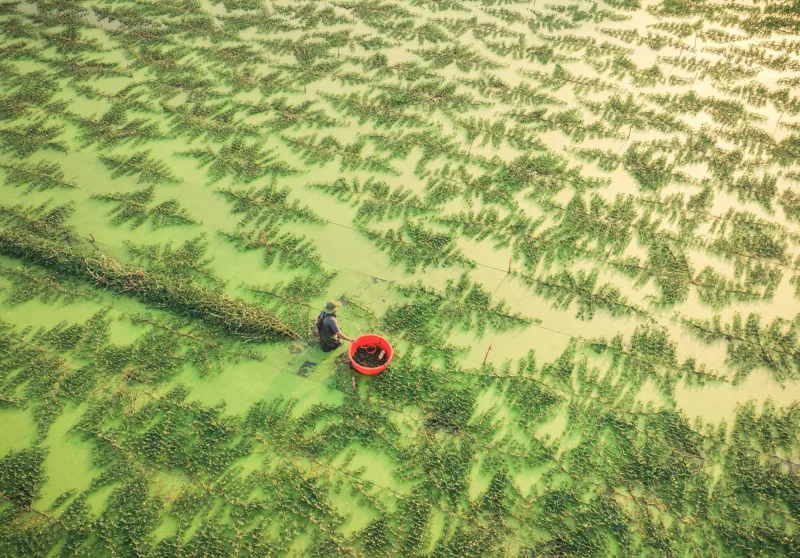
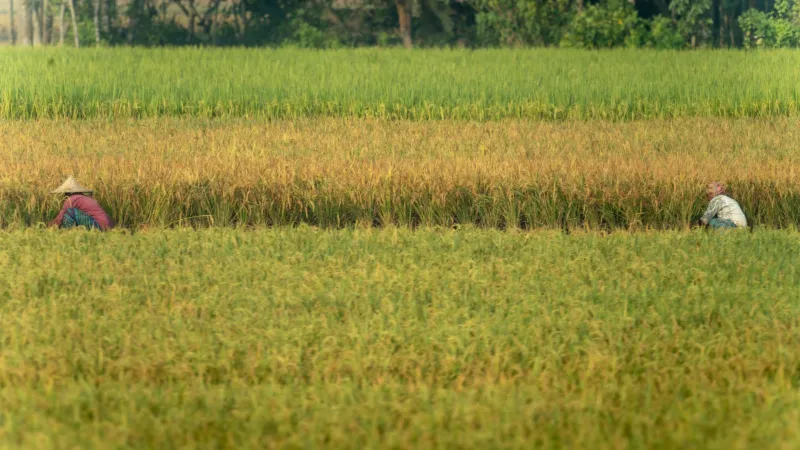
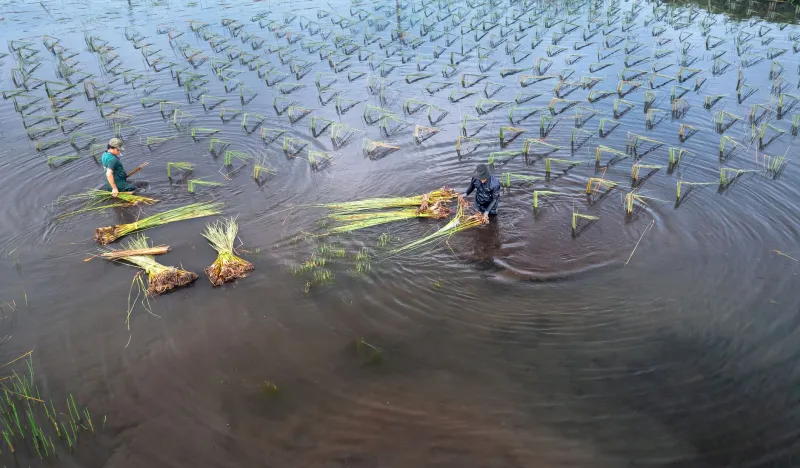
Ellie Thibodaux grew up knee-deep in crawfish ponds. Her father worked the same stretch of Cajun prairie his own father had worked before him — rotating rice and crawfish across a few hundred acres outside Breaux Bridge, Louisiana, the way families in that part of the state have done for generations. When she took over the operation in her early thirties, she expected to spend her days managing water levels, watching the weather, and arguing with equipment dealers.
She didn't expect to spend them talking to oncologists.
But that's exactly what she's been doing since 2021, when she opened up a section of her family's property to a team of environmental health researchers from a Louisiana state university. What started as a conversation at a crawfish industry meeting has grown into something neither side fully anticipated — a working model for how agricultural land can become a living laboratory, one that's quietly changing how scientists think about cancer risk in coastal farming communities.
The Question Nobody Was Asking Out Loud
For years, Ellie had been noticing things she couldn't quite explain. Neighbors getting sick. Older farmers she'd known her whole life facing diagnoses that seemed to cluster in ways that felt like more than bad luck. She'd heard the same quiet conversations that anyone paying attention in rural Louisiana had heard — whispers about water, about chemicals, about what decades of agricultural runoff might be doing to the people who live and work closest to it.
"Everybody kind of knew something was off," she says. "But nobody had the numbers to back it up, and nobody was really looking for them either."
That changed when she met Dr. Marcus Fontenot, an environmental epidemiologist whose research focuses on the intersection of agricultural water quality and cancer incidence in Gulf Coast communities. He was looking for a farm willing to host long-term water sampling and soil monitoring. She was looking for someone willing to take her concerns seriously. The match, by most accounts, was obvious.
Turning Ponds Into Data Points
The setup on Ellie's property isn't dramatic to look at. A handful of monitoring stations dot the edges of her crawfish ponds. Water samples get pulled on a regular schedule. Soil cores have been collected from different zones across the property. It looks, at first glance, like ordinary farm management.
But the data flowing out of those stations is anything but ordinary. Researchers are tracking pesticide residues, nitrate levels, heavy metal concentrations, and a range of other chemical markers across seasonal cycles. They're correlating those findings with health outcome data from surrounding parishes — cancer diagnosis rates, types, and timing — to build a clearer picture of whether and how long-term exposure to agricultural water environments might be contributing to elevated cancer risk in these communities.
Ellie's farm provides something that's surprisingly hard to come by in this kind of research: continuity. "Most studies grab a snapshot," Dr. Fontenot explains. "What we're building here is a film. We can watch how the water changes across years, across weather events, across different farming practices. That longitudinal view is genuinely rare."
Keeping the Business Alive While the Science Runs
One thing Ellie was clear about from the start: the research couldn't come at the expense of the farm. Her family's livelihood depends on the operation staying viable, and she wasn't willing to sacrifice that for the sake of a study — no matter how important the science might be.
To her relief, the partnership has actually worked in her favor economically. The university team covers the cost of monitoring equipment and sampling. In exchange for access, they've helped her identify water management practices that reduce chemical inputs without hurting yields. Her crawfish operation has gotten leaner and, by some measures, more sustainable. She's not the only one who's noticed — a couple of neighboring farmers have started asking questions about whether they might get involved too.
"I used to think science and farming were two different worlds," she says. "Turns out they've got a lot in common. You're both just trying to figure out what the land is telling you."
What the Research Might Mean for Communities Like Hers
The findings are still preliminary — this kind of environmental health research takes years to produce conclusions solid enough to act on. But early patterns in the data are drawing attention. The research team has already presented initial results at two regional public health conferences, and a peer-reviewed paper is in progress.
More importantly, the project has opened a door that was previously closed. Farmers in Louisiana's crawfish country have historically been skeptical of outside researchers, and for understandable reasons — they've seen studies that pathologized their way of life without offering anything useful in return. Ellie's willingness to be part of the process, and to talk openly about it within her community, has shifted some of that resistance.
"People trust her," says community health advocate Denise Arceneaux, who has worked in the Atchafalaya Basin region for over a decade. "When Ellie says this research is worth doing, that means something. It's not a stranger coming in and telling crawfish farmers their land is poisoning them. It's one of their own saying, let's figure out what's actually going on."
A New Template for Agricultural Health Advocacy
What's emerging from Ellie's operation is something that researchers and public health advocates are increasingly interested in replicating — a model where agricultural businesses and medical science work as genuine partners rather than adversaries. The farm provides access and local credibility. The researchers provide rigor and resources. The community gets data that actually reflects their lived reality.
For an organization like Crawfish for Cancer, this kind of collaboration represents exactly the kind of hope we like to talk about. It's not a cure. It's not a fundraiser. It's something quieter and, in some ways, more powerful — it's people deciding that the land they love deserves honest answers, and doing the hard work of finding them.
Ellie still gets up before dawn to check her water levels. She still hauls equipment and argues with the weather and worries about the price per pound at the dock. But now, when she walks her ponds in the early morning light, she's also walking through something that might — years from now, with enough patience and enough data — help explain why so many people in places like hers got sick, and maybe how to stop it from happening again.
That's a harvest worth waiting for.