Sick in the Fields: The Cancer Crisis Hiding Inside America's Crawfish Industry
Every spring, millions of Americans gather around newspaper-covered tables to eat crawfish. It's a ritual — the steam, the spice, the laughter. But somewhere between the pond and the pot, there's a story most people never hear. The workers who raise those crawfish, who wade through murky water and manage flooded rice fields from sunup to sundown, are getting sick. And the industry that feeds so much Southern joy has quietly become one of the more dangerous places to spend a working life.
This isn't about fear-mongering or turning a beloved tradition into something grim. It's about looking honestly at a community that gives a lot and gets very little back — especially when it comes to health protection.
What Crawfish Farming Actually Looks Like
Most people picture crawfish as wild creatures pulled from Louisiana bayous. And while wild-caught crawfish certainly exist, the majority of what ends up at your boil comes from farmed aquaculture operations — primarily in Louisiana, which produces roughly 90 percent of the nation's supply, with smaller operations in Texas, Arkansas, and Mississippi.
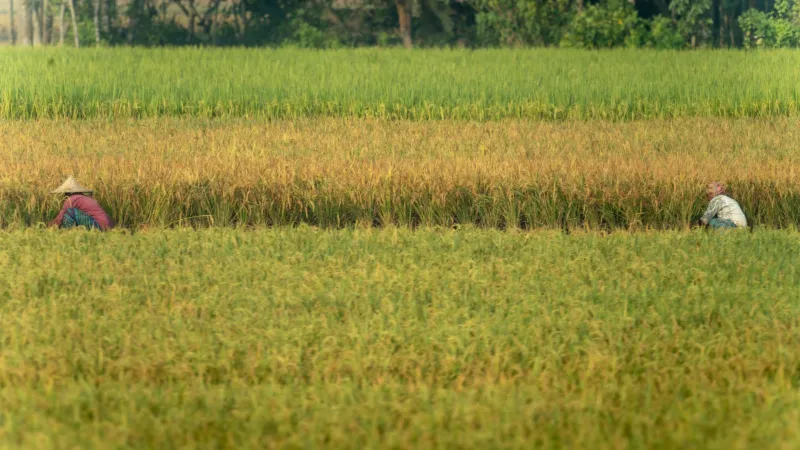
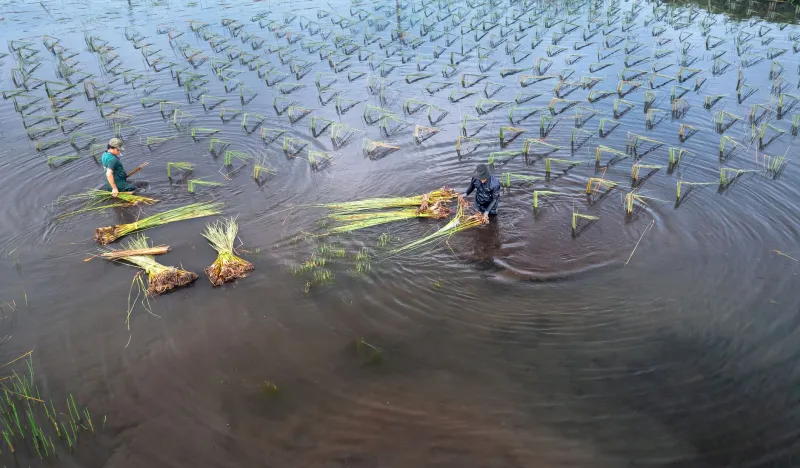
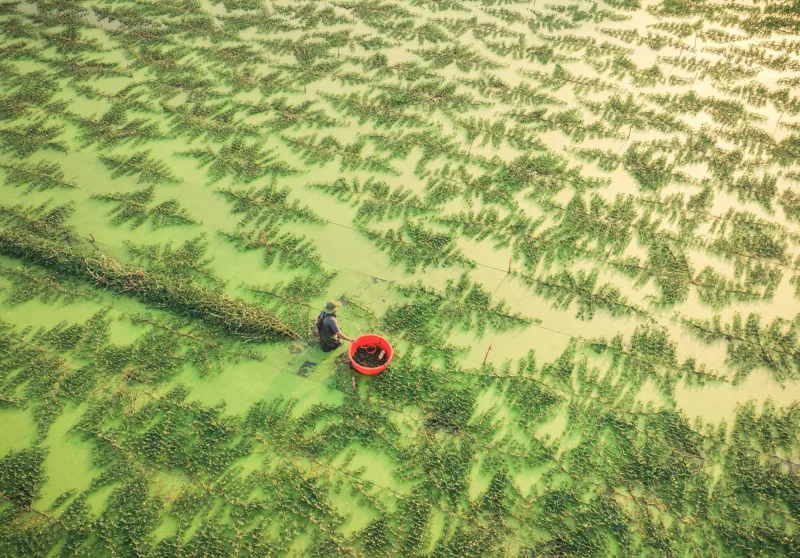
Crawfish farming is physically demanding, often seasonal work. Farmers manage shallow ponds, frequently rotating fields between crawfish and rice crops. Workers set and pull wire traps by hand, operate boats in standing water, and spend long hours exposed to whatever is in — and around — that water. That last part is where things get complicated.
These ponds don't exist in isolation. They sit inside an agricultural landscape saturated with chemical inputs. Herbicides manage aquatic vegetation. Insecticides drift from neighboring fields. Fertilizer runoff changes water chemistry in ways that are still being studied. And the workers managing these ponds absorb all of it — through skin contact, inhalation, and sometimes direct ingestion when safety protocols are minimal or nonexistent.
The Chemical Exposure Nobody Is Tracking Well
Here's one of the most frustrating parts of this story: we don't have great data. Agricultural workers as a whole are notoriously undercounted in occupational health research. Crawfish farmers specifically are an even smaller, harder-to-track subset. Many are self-employed or work for small family operations that fall below the reporting thresholds that trigger regulatory scrutiny.
What we do know comes largely from broader research on agricultural communities in the Gulf South. Studies have consistently linked pesticide exposure among farm workers to elevated rates of several cancers — non-Hodgkin lymphoma, leukemia, prostate cancer, and certain lung cancers among them. Organophosphate compounds, which are commonly used in rice and row-crop agriculture adjacent to crawfish ponds, have drawn particular concern from researchers.
Water contamination compounds the picture. Runoff from upstream agriculture can introduce a cocktail of chemicals into the shallow ponds where crawfish live and workers operate. Unlike deep-water fishing, crawfish farming means constant, close contact with that water. There's no boat deck keeping you at a safe distance. You're in it.
Workers interviewed by community health advocates in Louisiana have described symptoms ranging from chronic skin rashes and respiratory problems to more serious diagnoses that came years after their heaviest exposure periods. The lag time between chemical exposure and cancer diagnosis — often a decade or more — makes it nearly impossible for workers to connect the dots, let alone pursue any kind of legal or regulatory remedy.
The Regulatory Gap Is Real and It's Wide
The Occupational Safety and Health Administration covers most workplaces, but agricultural operations with fewer than eleven employees are largely exempt from OSHA's regular inspection authority. That exemption covers a significant portion of crawfish farming operations. The Environmental Protection Agency regulates pesticide use, but enforcement in rural agricultural settings is inconsistent, and the burden of reporting violations often falls on workers who fear retaliation or simply don't know their rights.
State-level protections vary dramatically. Louisiana, which has the most at stake given its dominance in the crawfish industry, has historically prioritized agricultural economic interests in its regulatory framework. That's not a criticism unique to Louisiana — it's a pattern across most major agricultural states. But it means that the workers most exposed to risk are also the least protected by the systems theoretically designed to keep them safe.
What workers say they actually need — when community health workers and advocates take the time to ask — is straightforward: better information about what chemicals are being used near their workplaces, access to affordable health screening, and a pathway to report concerns without risking their livelihoods. None of those things require sweeping federal legislation. Most of them require sustained community attention and investment.
Where Community Health Initiatives Can Step In
This is where organizations like ours have a real role to play. Regulatory change is slow and political. But community-driven health initiatives can move faster, work closer to the ground, and build the kind of trust that government agencies rarely manage in working agricultural communities.
Mobile health screening programs that bring cancer detection resources directly to farming communities have shown real promise in other agricultural contexts. Partnering with local clinics, agricultural extension offices, and worker advocacy groups to create accessible, non-threatening health outreach can reach people who would never walk into a hospital on their own. Fundraising events — yes, including crawfish boils — can direct dollars specifically toward health resources for the farming communities that make those events possible in the first place.
There's something quietly powerful about that loop. A crawfish boil raises money for cancer awareness. Some of that money goes back to support the health of the people who raised the crawfish. It's not a perfect solution to a structural problem, but it's a meaningful one.
Language access matters, too. A significant portion of crawfish farm workers are Spanish-speaking, and health materials that exist only in English aren't health materials for those workers — they're decoration. Any serious community health initiative targeting this population has to account for that reality.
The People Behind Your Plate Deserve Better
It feels important to say this plainly: the workers who make Louisiana's crawfish industry run are not a footnote. They're the reason this food tradition exists at all. When we talk about cancer awareness in the context of Southern food culture, we have to be willing to follow that conversation into uncomfortable places — including the fields and ponds where that food begins.
Raising cancer awareness means raising awareness about who gets cancer, and why, and what systems make some people more vulnerable than others. Agricultural workers in aquaculture communities aren't getting sick by accident. They're getting sick because of specific, identifiable exposures that better regulation, better research, and better community health investment could meaningfully address.
The crawfish on your table came from somewhere. The person who raised it deserves the same shot at a healthy life that you do.
If you want to help close that gap, start by supporting community health organizations working directly with agricultural workers in the Gulf South. Push for funded research into occupational cancer risks in aquaculture. And the next time you're planning a fundraising boil, think about where the proceeds go — and whether some of them can find their way back to the people who made the meal possible.