When the Pot Starts Boiling, Healing Begins: What Science Says About Shared Meals and Cancer Recovery
More Than a Meal
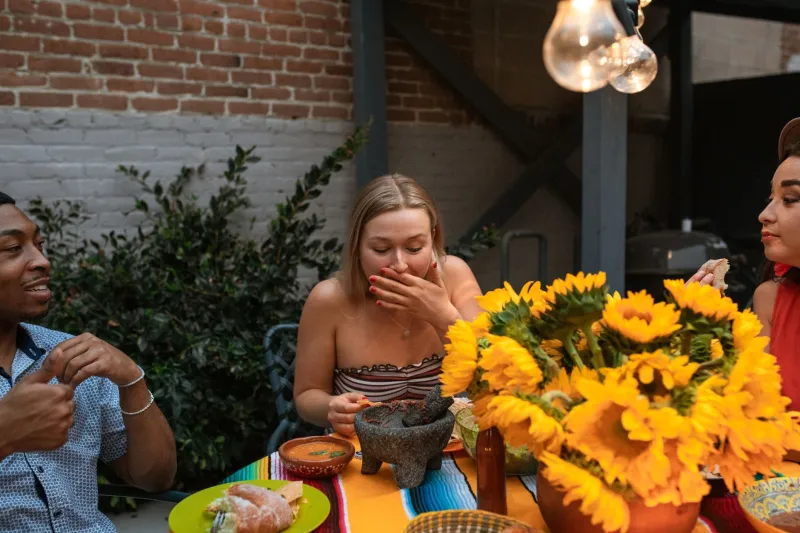
There's a moment that happens at every crawfish boil — somewhere between the first pour of seasoning and the sound of newspaper hitting a folding table — when something shifts. Shoulders drop. Laughter gets louder. Time slows down just enough for people to actually look at each other.
For years, we chalked that feeling up to good food and good company. Turns out, science has been quietly catching up to what Southern culture figured out generations ago. Shared meals — especially the loud, messy, communal kind — don't just feel good. They create measurable biological changes in the body. And for people navigating cancer, those changes matter more than most of us ever realized.
What Psychoneuroimmunology Has to Do With Your Crawfish Boil
Psychoneuroimmunology. It's a mouthful, but the concept is surprisingly intuitive. It's the study of how psychological experiences — stress, joy, loneliness, connection — directly influence immune function. The brain and the immune system, once thought to operate independently, are now understood to be in near-constant conversation with each other.
When you're stressed, your body releases cortisol and adrenaline. Short bursts of those hormones are fine. But chronic stress — the kind that shadows a cancer diagnosis — keeps those hormones elevated for weeks or months, suppressing immune activity and creating an internal environment that's harder for the body to heal in.
Here's where communal dining enters the picture. Research published in journals like Psychosomatic Medicine and Brain, Behavior, and Immunity has shown that positive social interactions — particularly those involving shared food — can measurably reduce cortisol levels, increase natural killer cell activity (a key component of immune surveillance), and stimulate the release of oxytocin, sometimes called the "bonding hormone." All three of those outcomes are genuinely relevant to cancer patients.
The Loneliness Problem Nobody Talks About Enough
Cancer is isolating in ways that go beyond the physical. Treatment schedules pull people out of their routines. Fatigue limits social engagement. Friends and family sometimes don't know what to say, so they say less. Before long, patients who were once embedded in rich social networks find themselves eating alone more often than not.
That isolation has real clinical consequences. A 2015 meta-analysis published in Perspectives on Psychological Science found that loneliness is associated with a 26% increase in premature mortality — a figure that rivals smoking and obesity as a public health risk. For cancer patients already facing elevated mortality risk, chronic social isolation compounds an already difficult situation.
A crawfish boil doesn't solve everything. But it does something powerful: it makes showing up easy. There's no awkward sit-down dinner where someone has to think of the right thing to say. There's a table covered in crawfish, corn, and potatoes. There's noise and movement and shared purpose — peeling, eating, passing things down the line. The activity carries the social interaction, which lowers the barrier for people who might otherwise feel uncomfortable visiting someone who's sick.
Treatment Adherence: The Unexpected Connection
One of the less-discussed challenges in cancer care is treatment adherence — patients completing their full course of chemotherapy, radiation, or immunotherapy as prescribed. Dropout rates are a real clinical problem, driven by side effects, fatigue, and perhaps most underappreciated, emotional exhaustion and hopelessness.
Research from the University of California, San Francisco, and other institutions has found that strong social support networks are among the most reliable predictors of treatment completion. Patients who feel connected — who have people actively engaged in their recovery — are more likely to show up to appointments, follow through on protocols, and communicate with their care teams when something goes wrong.
Put simply, people who feel loved tend to fight harder. And regular communal experiences — the kind that remind a cancer patient that they are seen and valued and worth showing up for — reinforce that sense of being loved in ways that clinical settings alone cannot replicate.
The Specific Magic of a Crawfish Boil
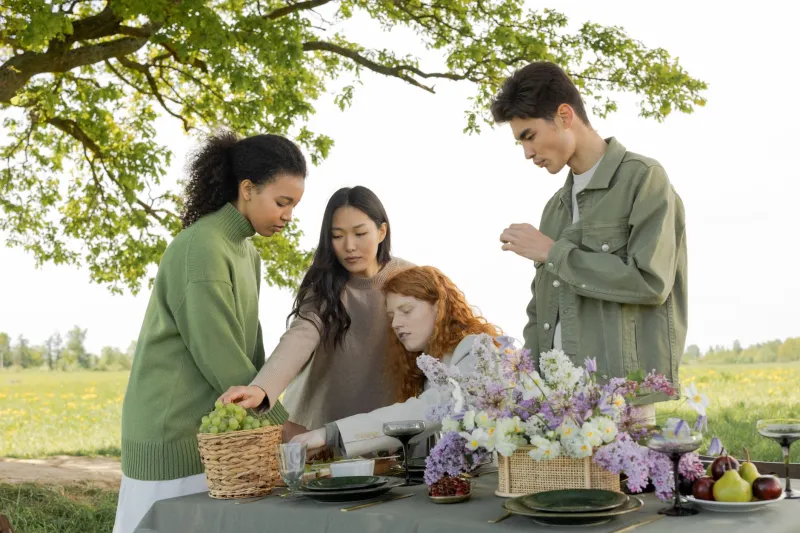
Not all shared meals are created equal, at least not from a social science perspective. Research on communal eating suggests that certain features of a meal amplify its psychological benefits: physical proximity, synchronized eating, shared sensory experience, and a degree of informality that lowers social defenses.
A crawfish boil checks every one of those boxes.
Everyone eats from the same pile. Everyone gets their hands dirty. The experience is inherently equalizing — there's no head of the table, no formal place settings, no performance required. A cancer patient at a crawfish boil isn't "the sick person." They're just someone eating crawfish with people who care about them.
That shift in identity — even temporarily — is not a small thing. Research on narrative identity in chronic illness suggests that patients who can access a sense of self that exists outside of their diagnosis experience better psychological outcomes and, through the mechanisms described above, better immune function as well.
What This Means for How We Think About Fundraising Events
At Crawfish for Cancer, we've always believed that the boil itself is part of the medicine. Not a metaphor — an actual, functional part of the healing ecosystem we're trying to build.
When we gather communities around a pot of crawfish to raise money for cancer research and patient support, we're not just collecting donations. We're creating therapeutic experiences for the survivors and patients in attendance. We're reducing their cortisol. We're activating their immune systems. We're reinforcing the social bonds that will carry them through the hardest parts of treatment.
That reframes what a fundraising event can be. It's not just a transaction — money raised in exchange for food and fun. It's a clinical intervention delivered in the most human way possible: through connection, through food, through the particular warmth of a Southern community that knows how to show up for its own.
Practical Takeaways for Survivors and Caregivers
If you're a cancer patient or survivor reading this, here's the simplest version of what the research suggests: eat with people as often as you can. Not every meal has to be a crawfish boil (though we'd never talk you out of it). Even small, regular shared meals — a weekly dinner with a neighbor, a standing lunch with a friend — can meaningfully support your body's ability to manage stress and maintain immune function.
If you're a caregiver, consider that inviting someone to a meal is not a small gesture. It may be one of the most clinically meaningful things you can do for the person you're supporting.
And if you're looking for a way to do all of this at scale — to create that healing environment for an entire community while raising money for research and patient services — well, you probably already know where we're going with that.
Fire up the pot. The science says it's good for everyone.